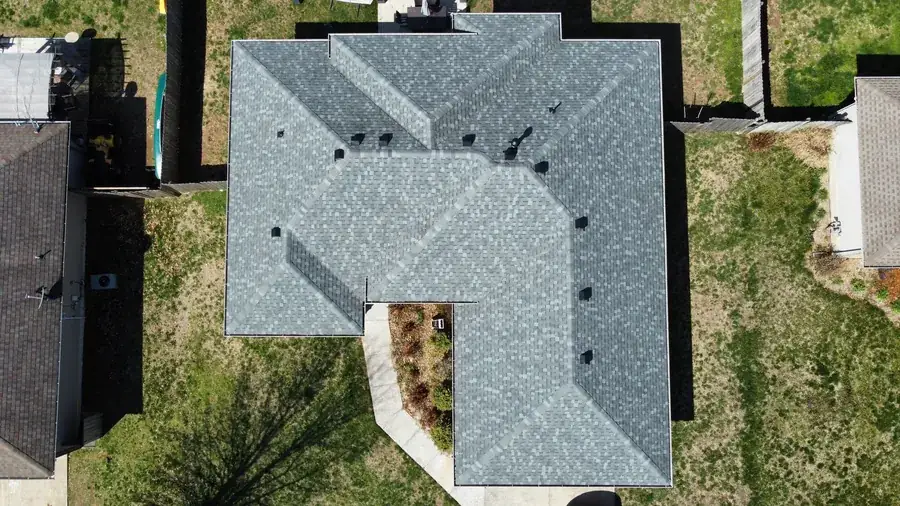
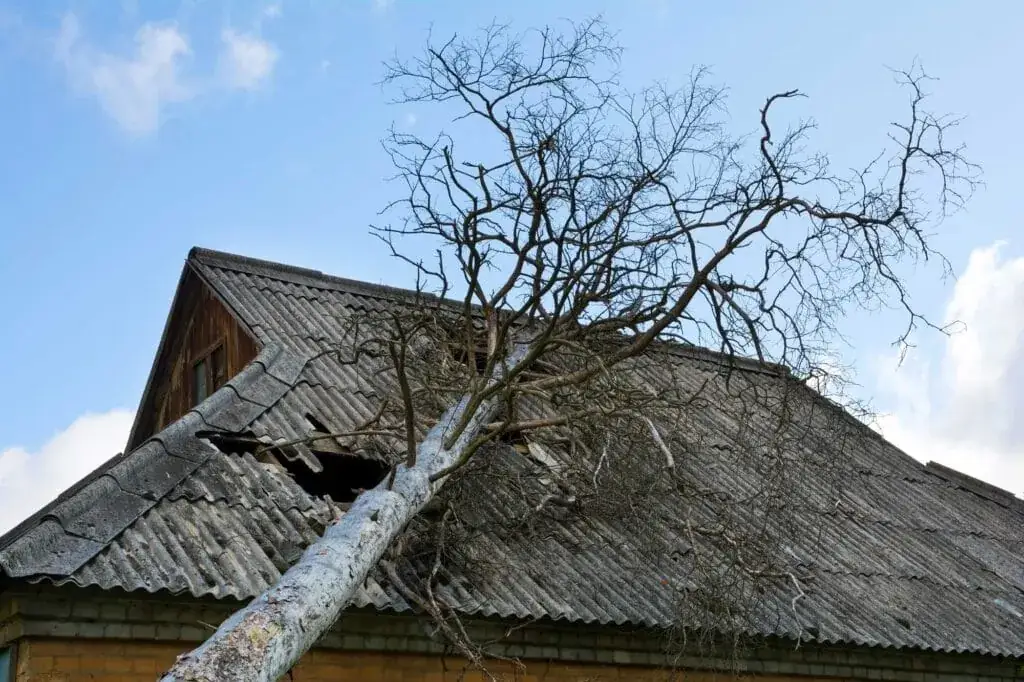
The roof can look normal from the driveway and still be bruised. Hail from the April 28 storm knocked mineral granules off asphalt shingles without leaving a hole, and those spots do not always leak right away. Here is how to check from the ground, and when to have someone walk the roof before winter.
What did the April 28 hailstorm do in Springfield?
On April 28, 2026, a severe storm crossed southwest Missouri and dropped very large hail on Springfield. The National Weather Service office here measured a 4-inch stone at their building in northwest Springfield, after it had been melting for 30 minutes. Their storm reports put the largest stone at 4.75 inches, about five miles southeast of Bois D'Arc, with baseball-sized hail (2.75 inches) in the same swath. The write-up lists damage to roofing, vinyl siding, gutters, and windows, and about 10,000 customers without power right after the storm.
That hail was a path, not a blanket over every block. The same reports show 4-inch hail south-southeast of Willard, 3.25-inch hail in Republic, 1.75-inch hail a few miles northwest of Nixa, and about an inch in Nixa and just west of Ozark. One inch and four inches are different storms, even on the same afternoon. Where your house sits is the first clue, not the last one. An older shingle can lose granules in hail that a newer roof shrugs off. Those sizes come from the National Weather Service write-up of the April 28, 2026 hailstorm.
How can you tell if hail damaged your roof?
A missing shingle, or a piece of one in the mulch, is easy to spot. Most of what this storm did to asphalt is not. A stone knocks the granules off a spot and bruises the mat under them. From the curb that mark is a freckle, if you can see it at all, and five months of sun has dulled it. A roof that looked okay in May can still be hurt.
Walk the house in daylight. You do not need to climb.
- Gutters and downspouts. Look along the top lip for dents. Soft metal marks easier than a shingle bruises, so dents do not prove the shingles are ruined. They prove hail hit the house hard enough to go look. A crushed gutter is its own problem, because water that should run off sits at the roof edge. If the metal will not drain, that is a gutter repair, not a Saturday chore.
- Granules. The grit in a gutter looks like coarse, dark sand. A little is normal on an older roof. A heavy pile, or the same grit where a downspout dumps, after a storm that dented the metal, means the shingles lost coating in that rain.
- Other soft metal. Air conditioner fins, aluminum window wrap, a flue cap you can see from the yard, downspout elbows. Hail leaves a scatter of dents. One scratch from a ladder does not.
- The attic, after a rain. Look for a new stain on the boards or a damp patch in the insulation. That is water that already got in. No stain does not clear the roof. It only means nothing has come through yet.
Stay off the roof for this pass. Wet shingles and a steep pitch are a bad combination, and boots scuff granules so the surface looks worse than the storm left it.
What does a hail bruise look like on asphalt shingles?
Up close, a bruise is a dark, roughly round spot where the granules are gone and the asphalt shows. It gives a little under a thumb. It is not a hole, and it usually does not leak the week of the storm. A fresh bruise looks shiny. By October the sun has flattened that shine, so what you saw in May is not the last word.
We also check ridge caps, pipe boots, and the metal on box vents. Those crack on roofs where the field shingles only show light hits. Wind that came with the hail can crease a tab without tearing it off. The crease breaks the seal between shingles. The tab lies back down until ice or a hard rain lifts it.
Scattered hits on a sound roof are often a repair. Bruises across a whole slope, or a roof that was already tired before April, are a different job. Patching circles on a worn-out roof just moves the leak. We say which one it is after the walk, with photos. That visit is the same storm damage inspection we do the week of a storm. If a roof repair is the right scope, we will say so.
Why look in October, before winter?
Springfield winters work on small gaps. Days get above freezing, nights drop below, and water at a dented gutter or under a lifted tab freezes and pries the opening a little wider. The ceiling stain often waits until January. By then the deck at that spot may be soft, and a repair that would have been shingles turns into wood.
October is also when the leaves drop. A gutter that was only dinged in April fills up, overflows at the fascia, and soaks the first course of shingles. Clean it if you can do that from the ground or from a ladder you trust on firm footing. If the gutter is high, the ladder feels wrong, or the dents are deep enough that water will not flow even when the trough is empty, leave it.
If the roof has to come off, mild days are still here for new shingles to seal. Waiting on the first ice does not shrink the job.
Should you still call your insurance about the April hail?
We are not your adjuster, and policies do not all read the same. Some carriers want a call quickly. Others leave a longer window. The timelines we see on Missouri hail claims are in a separate post on insurance timelines for hail damage in Missouri. Start there if you are deciding whether to open a claim.
Photos of the gutters, the air conditioner, and any shingles in the yard still help, and so do pictures from the roof. Waiting for a leak to prove the April storm makes it easier for an adjuster to call the wear ordinary age. Skip door-knockers still working that storm from out of town. A local crew that will walk the roof and show you the photos is the next step, claim or no claim.
Questions we hear after the April hail
My roof is not leaking. Does that mean the hail missed it?
No. A bruise can hold weather until the mat cracks, or until winter opens an edge. No leak is good news. It is not a clean report.
The cars are dented, but the shingles look normal. Should someone get on the roof?
Yes, if those dents are from this storm. Soft metal shows hail before asphalt does. Dents mean the house was in the hail. They do not, on their own, mean every slope has to be replaced. They mean someone should look at the shingles up close.
Did the April hail even hit Nixa or Ozark?
The National Weather Service reports for April 28 include 1.75-inch hail a few miles northwest of Nixa, about an inch in Nixa, and about an inch just west of Ozark. That is a different afternoon from the 4-inch stones on the northwest side of Springfield. Smaller hail can still mark soft metal and knock granules off a tired shingle. Smooth gutters and a smooth air conditioner, and no stones that you saw, put you in better shape than Willard or northwest Springfield. Speckled metal means have the roof checked anyway.
Is October too late to do anything about an April storm?
Not for the roof. The damage does not pause because the calendar turned. What gets harder with time is tying the marks to one storm, if a claim is part of the plan. For the house, finding a bruise now beats finding it as a wet ceiling in February.
If you want a second set of eyes, we will walk it. Call Titan Roofing at (417) 815-4833 and ask for an inspection. We will tell you what we see, including when the honest answer is that this roof can wait.

Titan Roofing is a family-owned roofing company serving Springfield, Kansas City, Columbia and the surrounding Missouri communities with residential and commercial roof repair, replacement, gutters and siding. Questions about your roof? Ask us, or call (417) 815-4833.